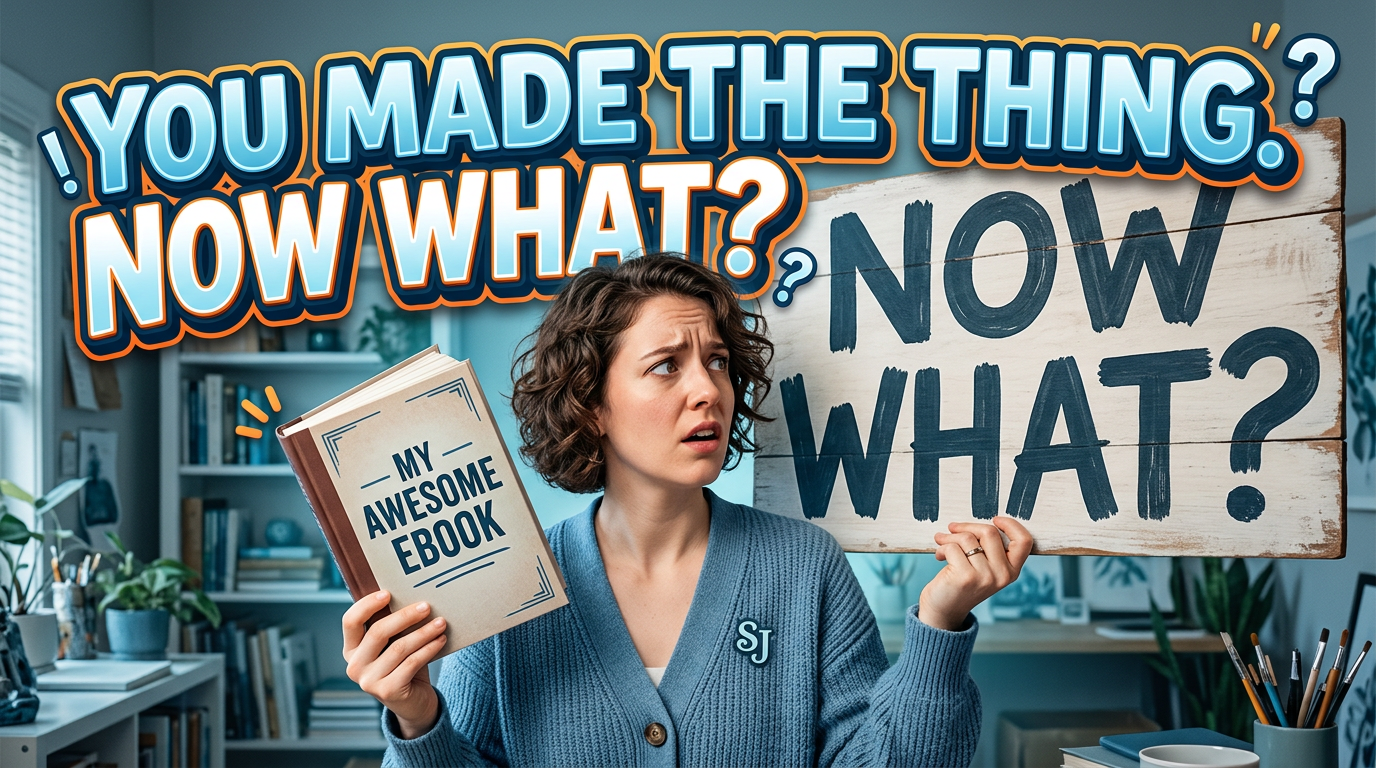
You did it.
You finally finished your digital product.
The ebook is written.
The workbook is complete.
The templates are organized.
You even have a pretty cover.
You've opened the file several times just to admire your handiwork.
You might have shown it to someone.
You might have announced that it's almost ready.
And then, somewhere between the celebration and the next cup of coffee, a very important question appears.
Now what?
Where do you put it?
How do people buy it?
How do they receive it?
How do you tell anyone it exists?
Suddenly, that finished product doesn't look quite so finished anymore.
Welcome to the part of product creation that nobody remembers to mention while you're busy making the thing.
Creating It Was Only the First Step
When you start developing a digital product, most of your attention goes toward the product itself.
You research the subject.
You organize the information.
You write the content.
You create the graphics.
You format everything.
You revise it.
And finally, you finish.
It's a big accomplishment.
But creating a product and publishing a product are two different jobs.
A finished ebook sitting on your computer isn't automatically available for purchase.
A beautiful workbook doesn't come with a built-in delivery system.
And a fantastic collection of templates won't find customers simply because you've given the folder a professional name.
Your product needs somewhere to go.
It needs a way for people to discover it, understand what it offers, purchase it, and receive it.
That's the next part of the process.
Meet Your New List of Questions
Once the product is finished, you'll probably encounter a few new decisions.
Don't panic.
They're not as complicated as they might initially appear.
1. Where Will You Sell It?
You need a place where people can learn about your product and make a purchase.
That might be a marketplace, a digital product platform, your own website, or a simple sales page.
You don't need to build an elaborate online store to sell your first ebook.
You just need a place where someone can understand what you're offering and decide whether they want it.
2. How Will People Pay?
You'll need a way to accept payment.
Depending on your selling platform, payment processing may already be included.
If you're using a separate sales page, you'll need to connect an appropriate payment service.
The important thing is to make sure the buying process works before you start sending people to it.
3. How Will They Receive the Product?
Digital products need delivery instructions.
Will customers receive a download link?
Will they get an email with access?
Will they be directed to a customer area?
Many platforms handle this automatically once you upload your product and configure the delivery settings.
That's one less thing you have to manage manually.
4. How Will People Find Out About It?
This is where publishing turns into promotion.
You'll need a way to introduce your product to potential customers.
That might include a social media post, an email to your list, a blog article, a short video, or a helpful resource that naturally leads people toward your offer.
You don't need to use every marketing channel.
Start with the places where you can realistically reach people.
5. What Happens After Someone Buys?
Think about the customer's experience.
Does the confirmation email make sense?
Can they find their download?
Do they know where to get help if something goes wrong?
A little attention to these details can make the buying experience much smoother.
Build the Simple Version First
Here's where some creators accidentally turn a straightforward publishing task into another enormous project.
They decide they need:
- A complete website.
- A complicated sales funnel.
- Five email sequences.
- A dozen promotional graphics.
- A social media campaign.
- An affiliate program.
- A membership area.
- A collection of bonus products.
And suddenly, the finished ebook is sitting on the desk while its creator builds an entire business infrastructure around it.
Some of those things may be useful eventually.
But they aren't all required to publish your first product.
Start with the basic path:
Product → Sales Page → Payment → Delivery → Promotion
That's enough to create a functional starting point.
You can improve the process as you learn what works and discover what your customers need.
You don't have to build the entire kingdom before opening the first shop.
Give Your Product a Proper Introduction
One thing worth spending a little time on is explaining what your product actually does.
A product description should help potential buyers understand:
- What the product is.
- Who it's intended for.
- What problem it helps solve.
- What's included.
- What the buyer can expect to accomplish.
You don't need to write a novel.
You need to communicate the value clearly.
Remember, you already know why you created the product.
Your potential customer doesn't.
Don't assume the cover or product title explains everything.
Give people enough information to decide whether it's right for them.
Test Before You Announce
Before you start promoting your product, walk through the buying process yourself.
Check the sales page.
Click the purchase link.
Verify the payment settings.
Check the delivery instructions.
Make sure the product file opens correctly.
Look at the emails customers will receive.
If possible, run a test purchase using your platform's testing options or another safe method.
You want to discover problems before a customer does.
There's nothing quite like announcing your exciting new product and then discovering that the download link leads to a folder containing three unrelated graphics and an old grocery list.
Let's avoid that.
You Don't Need to Become a Marketing Department Overnight
Once your product is available, you can begin telling people about it.
Start with a simple introduction.
Explain the problem it solves.
Show what's included.
Share why you created it.
Answer questions.
You can build additional promotional material over time.
You can create videos, write articles, develop email campaigns, and experiment with different ways to reach your audience.
But you don't have to do all of that before your product goes live.
Your first launch is an opportunity to learn.
You'll discover which messages attract attention, what questions people ask, and where you may need to improve the buying experience.
That's useful information for your next product, too.
From Finished File to Finished Offer
Take another look at that ebook, workbook, or collection of templates.
You made something.
That's worth celebrating.
Now give it a place where people can find it.
Make it easy to understand.
Give people a way to buy it.
Make sure they can receive it.
Then start telling the right people about it.
You don't need a perfect website, a massive audience, or a complicated marketing machine to take those first steps.
You need a working process that connects your product with someone who might find it useful.
Creating the product was an accomplishment. Making it available is the next one.
So put down the finished ebook for a moment.
Stop admiring the cover.
We've admired it enough.
It's time to give that thing somewhere to go.
And this time, when someone asks, “Where can I get it?”
You'll have an answer.
Comments