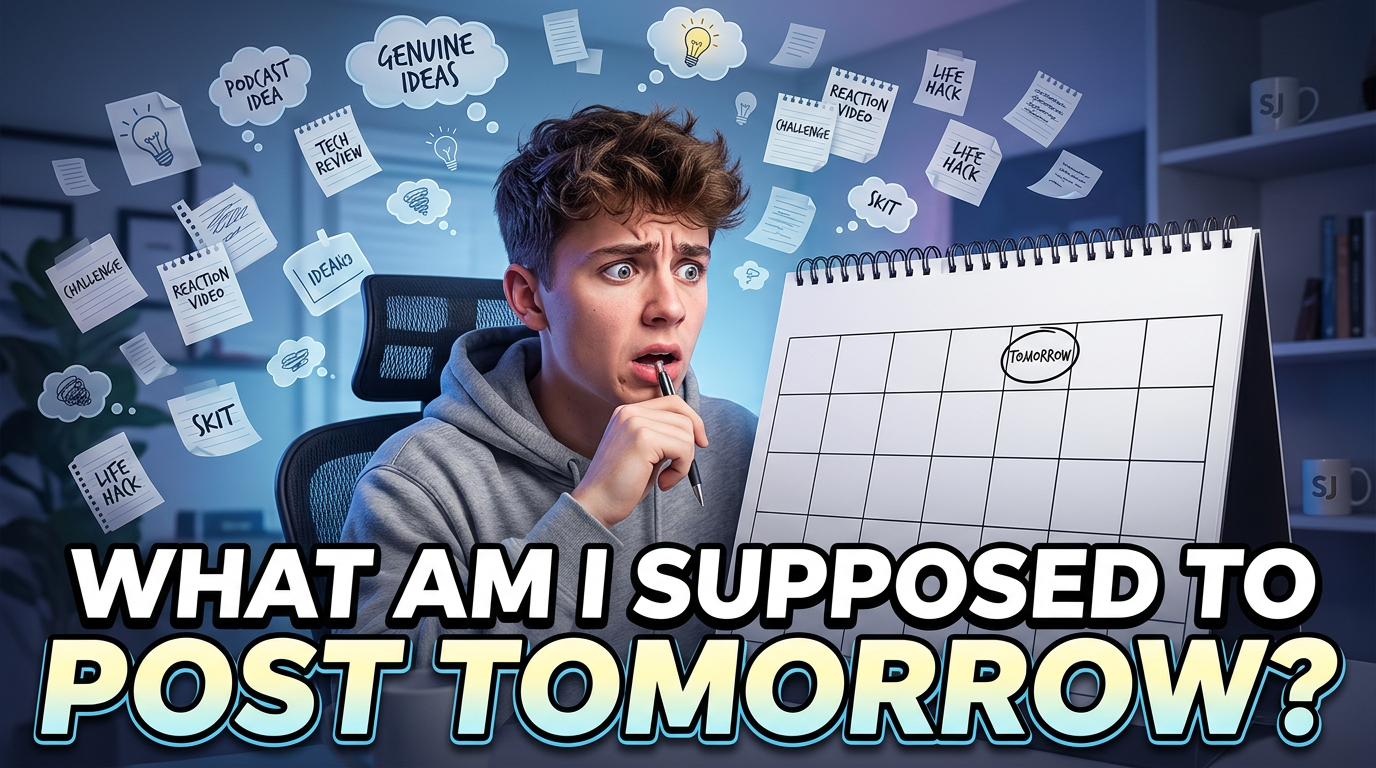
It's 4:47 p.m.
You've finished your work for the day.
Well, most of it.
There's just one small problem.
You need to post something tomorrow.
You open your content calendar.
It's empty.
You open your notes.
There are 47 ideas, but none of them seem right.
You scroll through social media for inspiration and discover twelve new things you're apparently supposed to be doing.
Now you're overwhelmed, slightly annoyed, and wondering whether announcing what you had for lunch counts as content.
It might.
But let's see if we can find something better.
The Daily Content Panic
If you create content regularly, you've probably experienced this moment.
You know you need to publish something.
You want it to be useful, interesting, or entertaining.
You'd prefer it not to sound like every other post on the internet.
And ideally, you'd like to create it without spending the entire evening staring at a blinking cursor.
So you start looking for inspiration.
You browse other people's posts.
You check the latest trends.
You revisit old ideas.
You open a new document.
And somehow, deciding what to post becomes a bigger project than actually creating the post.
The trouble isn't always that you have nothing to say.
Sometimes, you're trying to invent tomorrow's content at the exact moment you need to publish it.
That's a lot of pressure to put on one ordinary Tuesday.
Your Content Ideas Are Hiding in Plain Sight
Here's a reassuring thought.
You don't have to come up with a completely original idea every time you publish something.
Your everyday business activities can give you plenty to talk about.
Questions people ask
What do people want to understand about your subject? What do beginners often get wrong? Which questions keep appearing in conversations?
Those questions can become helpful posts.
Mistakes you've made
Did you try something that didn't work? Discover an easier way to do a task? Learn something you wish you'd known earlier?
Share the lesson.
You don't have to present yourself as someone who gets everything right. Sometimes the most useful advice comes from explaining what you learned the hard way.
Things you wish more people understood
Perhaps there's a common misconception in your field.
Maybe you disagree with popular advice.
Maybe you keep seeing people make the same mistake.
That gives you an opportunity to explain your perspective.
Small steps and useful tips
Not every post needs to reveal a revolutionary new method.
A simple shortcut, a helpful reminder, or a practical next step can be enough.
Your audience doesn't need every post to change their lives.
Sometimes they just need to know how to do the thing they're trying to do.
Stop Making Your Brain Work on a Deadline
Your brain can be wonderfully creative.
It can also become remarkably uncooperative when you tell it that it must produce a brilliant idea immediately.
That's why it helps to capture ideas before you need them.
When something occurs to you, write it down.
When you answer a useful question, save it.
When you learn something worth sharing, make a note.
When you notice a common problem, add it to your list.
Don't worry about turning every idea into a finished post right away.
Just capture enough information that you'll remember what you meant later.
Your notes might be in a document, a spreadsheet, a notebook, or whatever system you'll actually use.
The best idea bank isn't the fanciest one.
It's the one you remember to open.
Build a Small Content Idea Bank
You don't need a database with 27 categories and a complicated filing system.
Start with a simple list.
Whenever you think of a possible post, record the basic idea.
If it helps, organize your ideas into a few broad groups:
- Teach: Explain something useful.
- Encourage: Help your audience keep going.
- Share: Tell a story, lesson, or behind-the-scenes detail.
- Discuss: Ask a question or explore an opinion.
- Demonstrate: Show how something works.
These categories aren't strict rules. They're simply ways to help you see different possibilities when your calendar looks empty.
If you can't think of something to teach, perhaps you have a story to share.
If you don't have a story, perhaps there's a question worth discussing.
You don't have to use every category every week.
You just need a few different doors to open when you're looking for an idea.
One Idea Can Become More Than One Post
Here's another trick that can make content creation easier.
You don't always need a new idea.
Sometimes you need a new way to use an idea you already have.
Suppose you've written a useful article about avoiding common mistakes when starting a business.
That article might give you several smaller posts:
- One post about the biggest mistake.
- One post explaining a practical solution.
- One question asking readers about their experiences.
- One short video demonstrating a useful step.
- One behind-the-scenes story about how you learned the lesson.
These aren't necessarily copies of the same post.
They're different ways to explore a subject your audience may find useful.
You can also revisit older content when it's still relevant. Update it, add a fresh example, or explain the idea from a different angle.
You don't need an endless supply of new ideas when your existing ideas still have something useful to offer.
Just make sure each post gives people a reason to pay attention rather than repeating the same message without adding anything.
Plan Enough to Make Tomorrow Easier
You don't have to plan an entire year of content.
If that sounds helpful to you, wonderful. But it's not a requirement for running a business.
Start small.
Set aside a little time to collect ideas and choose a few you want to develop.
You might prepare three posts for the coming week.
You might outline a couple of topics and leave the details for later.
You might keep five ready-to-use ideas for the days when inspiration refuses to cooperate.
The point is to give yourself options.
When tomorrow arrives, you won't have to begin with an empty calendar and a desperate search for something to say.
You'll have a starting point.
And that alone can make content creation feel much more manageable.
Let Tomorrow Be Tomorrow's Problem
Well, part of it, anyway.
You don't have to create every post in advance.
You don't have to turn every thought into content.
You don't have to publish something profound every day.
And you certainly don't have to follow every trend that wanders past your screen wearing a neon sign that says, “YOU MUST DO THIS NOW.”
You need a manageable way to collect ideas, choose useful topics, and create content that serves your audience.
Some days, you'll have more ideas than you can use.
Other days, you'll need to spend ten minutes looking through your notes.
Both are perfectly normal.
So the next time you open your content calendar and see nothing but empty squares, don't panic.
Look at your idea bank.
Review the questions people ask.
Think about something you've learned or a problem you've helped solve.
Choose one useful idea and start there.
Because you don't need to know what you're posting tomorrow every time a new idea crosses your mind. You just need a reliable place to keep the ideas worth returning to.
Now close the 14 browser tabs you opened looking for inspiration.
Pick an idea.
Make the post.
And let tomorrow's calendar breathe a little easier.
Comments