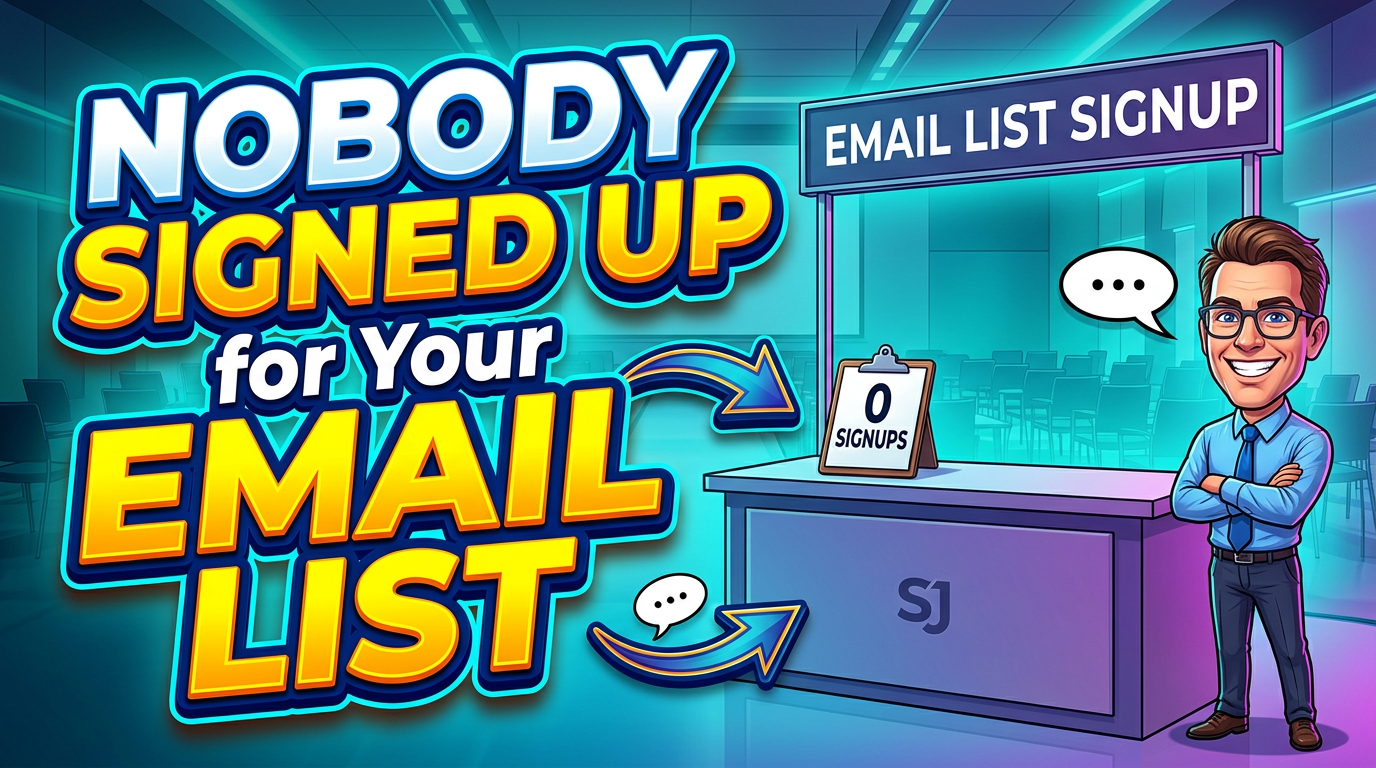
You created an email signup form.
You gave it a nice headline.
You explained why people should subscribe.
You might have even created a freebie to encourage people to join.
Then you announced your new newsletter.
You checked your subscriber count.
Zero.
You checked again.
Still zero.
You refreshed the page, just in case the internet was having a moment.
Nope.
Your email list has officially opened for business, and apparently nobody got the invitation.
Welcome to the exciting world of audience building.
The refreshments are over there.
The signup desk is empty.
And the person standing behind it is beginning to question his career choices.
Every Email List Starts Somewhere
It's easy to feel discouraged when nobody signs up.
You've put time into creating something useful. You have information to share. You may even have a whole collection of ideas for future emails.
But people aren't joining.
It's tempting to assume that nobody is interested.
Or that your freebie isn't good enough.
Or that you need a better website, a different signup form, a new headline, or perhaps an entirely different business.
Before you start dismantling everything, remember something important.
Every email list starts with zero subscribers.
The newsletters you admire didn't begin with thousands of people waiting for the next issue.
Someone had to get the first subscriber.
Then the second.
Then the third.
It may not feel impressive at the beginning, but that's how an audience gets built.
You aren't behind because your list is small.
You're at the beginning of the process.
Give People a Reason to Join
Let's look at your invitation.
If someone visits your website and sees a box that says:
Subscribe to my newsletter.
What do they know?
Not much.
They don't know what you'll send.
They don't know whether it will be useful.
They don't know how often you'll email them.
And they certainly don't know why they should give you access to their inbox.
People receive plenty of email already.
They need a reason to welcome more.
Instead of simply asking people to subscribe, explain what they'll get.
For example:
- Practical tips for creating digital products.
- Weekly ideas for building a small online business.
- Helpful resources for learning a new skill.
- Simple strategies for growing an audience.
- Behind-the-scenes lessons from your own experience.
Be specific.
People should have a reasonable idea of what they're signing up for before they hand over their email address.
A Freebie Can Help, But It Isn't Magic
Offering something useful in exchange for an email signup can be a good way to attract subscribers.
It might be:
- A checklist.
- A short guide.
- A collection of templates.
- A useful worksheet.
- A resource list.
- A quick-start plan.
The important thing is that it should appeal to the people you actually want on your list.
A freebie about organizing digital products may attract people interested in creating and selling digital products.
A random giveaway might attract people who simply enjoy collecting free things.
Those aren't necessarily the same audience.
You don't need to create a 100-page ebook to encourage someone to subscribe.
A small, useful resource can be enough.
Just make sure the freebie delivers what you promised.
And please don't spend six weeks creating it before you start inviting people to join your list.
We already have enough unfinished projects in the kingdom.
Your Signup Form Needs an Invitation
Another common problem?
You created the signup form.
You placed it on your website.
And then you waited.
Unfortunately, signup forms don't come with built-in audience magnets.
People need to know the invitation exists.
Mention your newsletter when you publish relevant content.
Add a signup link to your social profiles where appropriate.
Include an invitation in blog posts.
Share your free resource with people who might genuinely benefit from it.
If someone asks you a question that relates to your newsletter topic, you might mention that you regularly share helpful information about that subject.
You don't need to turn every conversation into a subscription pitch.
Just make it easy for interested people to discover what you're offering.
A signup form is a place to join. It isn't a plan for getting people there.
Start With People, Not Numbers
When you're trying to grow an email list, it's tempting to focus entirely on the subscriber count.
You want to see that number increase.
That's understandable.
But don't forget what the number represents.
Each subscriber is a person who has chosen to hear from you.
They may have joined because they liked an article, wanted your freebie, or found something useful on your website.
Your job is to give them a good reason to stay.
Send helpful emails.
Share information that matches their interests.
Be consistent enough that they know what to expect.
Don't overwhelm them with messages simply because you're excited to have subscribers.
And don't treat your list like a trophy collection.
A smaller list of interested people can be a much better foundation than a large list of people who have no real interest in what you offer.
Make the First Few Subscribers Count
When someone finally joins, don't overlook the opportunity.
Have a simple welcome email ready.
Thank them for subscribing.
Deliver any promised free resource.
Tell them what kind of information they can expect.
Give them a reason to look forward to hearing from you again.
You don't need a complicated automated email sequence to begin.
A clear, friendly welcome is a perfectly reasonable starting point.
As your list grows, you can improve the experience with additional emails, useful resources, and more targeted content.
But start with the basics.
Make sure people receive what they signed up for.
That first impression matters.
Don't Build the Entire Auditorium Yet
Here's something else worth remembering.
You don't need thousands of subscribers before your email list becomes useful.
You need to attract the right people and build a relationship with them.
You can learn from a small list.
You can discover which topics interest people.
You can see which emails generate replies.
You can understand what questions your audience has and what problems they want help solving.
That information can help you improve your content, products, and business.
You don't need a packed auditorium to begin.
You need a few people who actually want to be there.
Give That Signup Desk Some Hope
If your email list is sitting at zero, don't panic.
Your signup form isn't necessarily broken.
Your freebie isn't automatically terrible.
And your business hasn't been rejected by the entire internet.
You may simply need to make your invitation clearer, give people a useful reason to subscribe, and put that invitation in front of the right audience.
Keep publishing.
Keep sharing useful information.
Keep making it easy for interested people to join.
And when that first subscriber arrives?
Celebrate.
You earned that signup.
Just try not to hire a marching band for the occasion.
Although, if subscriber number two arrives shortly afterward, I suppose a small parade wouldn't hurt.
Every email list starts with one person deciding they'd like to hear from you.
Give that person a good reason to stay.
Then work on finding the next one.
The signup desk won't be empty forever.
Comments