You woke up with a plan.
You were going to create one useful post.
Just one.
Then you opened the internet.
Someone said you should post three times a day.
Someone else said five.
Another expert insists you need daily videos, regular stories, weekly long-form content, and a newsletter.
And apparently, if you don't publish at exactly the right time on the correct day while Mercury is doing something mysterious, the algorithm will forget you exist.
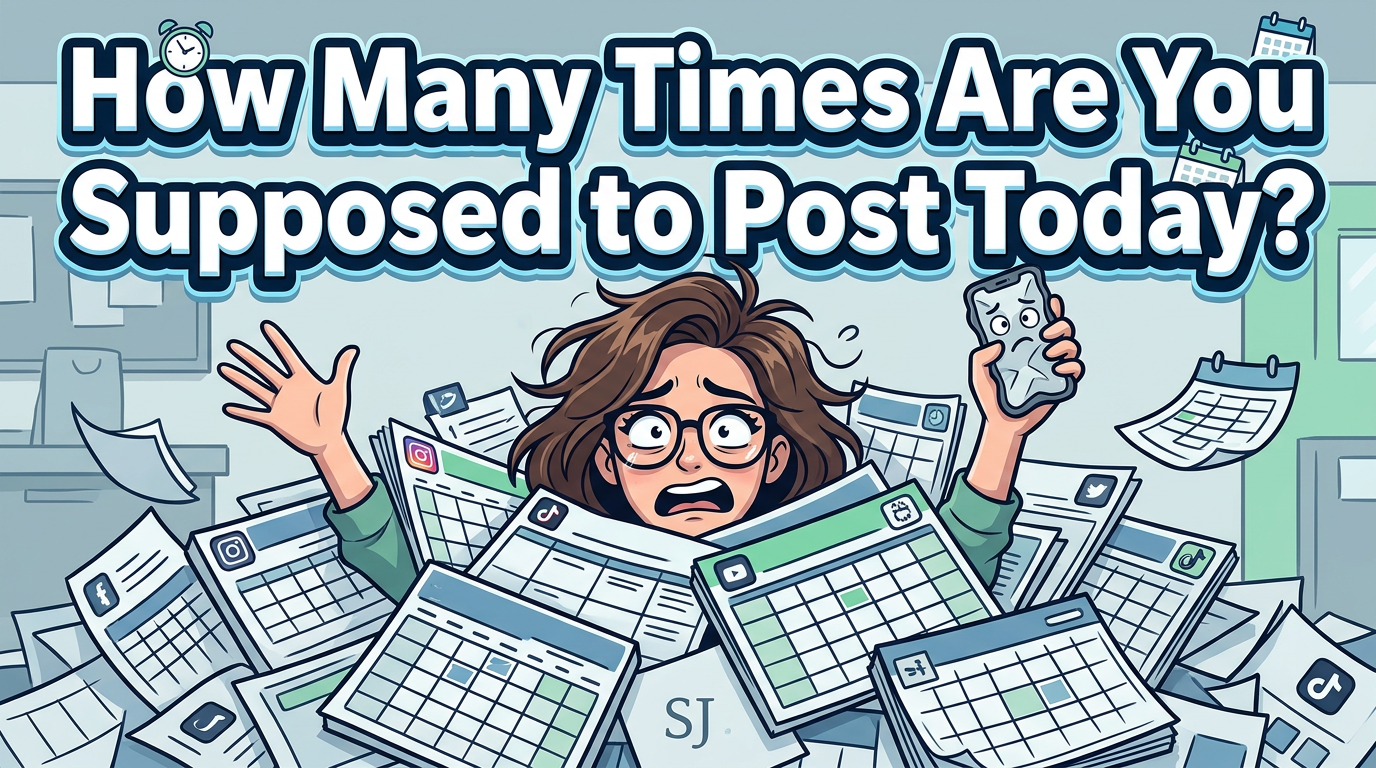
Now you're buried under seventeen content calendars, six social platforms, and a phone that's beginning to look as stressed as you feel.
You wanted to build an audience.
Somehow, you've become a full-time content production department.
With no staff.
And questionable coffee.
Welcome to the Posting Olympics
The internet has turned content creation into a competitive sport.
Post daily!
Post multiple times daily!
Repurpose everything!
Be everywhere!
Show up consistently!
Don't forget engagement!
Oh, and make sure every post provides value.
Naturally, you should also create something worth promoting, run your business, answer emails, and occasionally remember that you are a human being.
It's a lot.
And the strangest part?
Much of the advice comes from people who may have completely different businesses, audiences, resources, and goals from yours.
Yet somehow, their posting schedule has become your homework assignment.
There Is No Universal Posting Number
Let's get one thing straight.
There isn't a magic number of posts that guarantees audience growth.
The right frequency depends on several things:
- Your platform: Different platforms have different formats and habits.
- Your audience: The people you want to reach may prefer certain types of content.
- Your goals: Getting discovered, building trust, and encouraging sales aren't identical objectives.
- Your resources: You have a limited amount of time and energy.
- Your content: One thoughtful, useful post may take considerably more effort than a quick update.
Someone who creates short videos all day may have a very different publishing rhythm from someone writing detailed tutorials or building digital products.
Neither schedule automatically makes one person better at business.
Your job is to find a rhythm that serves your business—not copy someone else's timetable.
Consistency Doesn't Mean Constant Activity
This is where the advice often gets confusing.
Consistency is useful because people need opportunities to discover you, understand what you do, and become familiar with your work.
But consistency doesn't mean you must publish something every time you draw breath.
You can be consistent with a manageable schedule.
You can publish every Tuesday.
You can send a newsletter every Friday.
You can create two useful posts a week and spend the remaining time improving your product.
The important question is whether your schedule supports your goals and whether you can maintain it.
A schedule you can follow for months is generally more useful than an ambitious plan you abandon after nine exhausting days.
Choose Your Own Posting Rhythm
Instead of asking the internet how often you should post, start with a more practical question:
How often can I publish something useful without neglecting the rest of my business?
Start there.
Choose a frequency you can reasonably maintain.
Pick the platforms that make sense for your audience.
Decide what kinds of content you want to create.
Then give the schedule a fair chance.
You can always adjust later.
If your audience responds well and you have the resources to do more, experiment with increasing your frequency.
If the schedule becomes overwhelming, simplify it.
You aren't signing a lifetime contract with your content calendar.
Make One Piece of Content Work Harder
Here's a thought that might save you a considerable amount of time.
You don't necessarily need to create something completely new for every platform.
One useful article might become:
- A short Facebook post.
- A LinkedIn post focused on the business lesson.
- A few smaller social updates.
- A short video explaining one key point.
- A newsletter discussion.
- A graphic highlighting a useful takeaway.
That's not six entirely separate ideas.
It's one idea adapted for different places.
Of course, not every piece of content needs to be repurposed everywhere. Choose the formats and platforms that make sense.
But when you already have something useful, you don't always need to start from scratch.
Create thoughtfully. Reuse intelligently. Give yourself a break.
Your content calendar may need fewer new ideas and a little more cooperation.
Measure Progress, Not Exhaustion
Posting more gives you more opportunities to learn, but activity alone doesn't tell you whether your content is working.
Pay attention to useful signals.
Are the right people discovering your work?
Are they responding, sharing, clicking, or asking questions?
Are you attracting people who might eventually become customers?
Are certain topics consistently more useful to your audience?
Look for patterns over time rather than judging your entire strategy by one quiet post.
Then use what you learn to make better decisions.
If publishing more isn't improving your results, doing even more of the same thing may not be the answer.
You might need clearer messaging, more relevant topics, better distribution, or a different approach.
Another content calendar won't automatically fix those problems.
Your Business Is Not a Content Factory
Remember why you started creating content in the first place.
You wanted to build an audience, share useful information, attract customers, or grow a business.
Content is supposed to help you do those things.
It isn't supposed to consume every available hour while the actual business sits unattended in the corner.
You still need time to create products, improve your offers, serve customers, learn from your results, and decide what to do next.
Those activities count, too.
So the next time someone announces that you absolutely must publish seven times a day on a platform you've never used, take a breath.
Consider whether the advice fits your situation.
If it does, test it.
If it doesn't, let it go.
You are allowed to build your audience without participating in every event at the Content Olympics.
Because somewhere beneath that mountain of calendars is a business that needs your attention.
And a creator who probably deserves a cup of coffee that hasn't gone cold.
Pick a rhythm. Create something useful. Keep going.
And if the internet invents another posting requirement next Tuesday?
It can put it in writing.
You'll review it during normal business hours.
Comments